
How accurate is cnc lathe machining for custom metal components?
CNC lathe machining achieves consistent dimensional tolerances of ±0.005 mm and surface roughness values as low as 0.32 Ra, driven by spindle speeds exceeding 6,000 RPM. Thermal displacement sensors compensate for the 12-15 micrometers of expansion typically seen in 4140 steel during 60-minute cycles. Modern systems utilize 24-bit high-resolution encoders to maintain positioning accuracy within 0.001 mm, ensuring that 99.7% of custom components meet Six Sigma quality benchmarks.
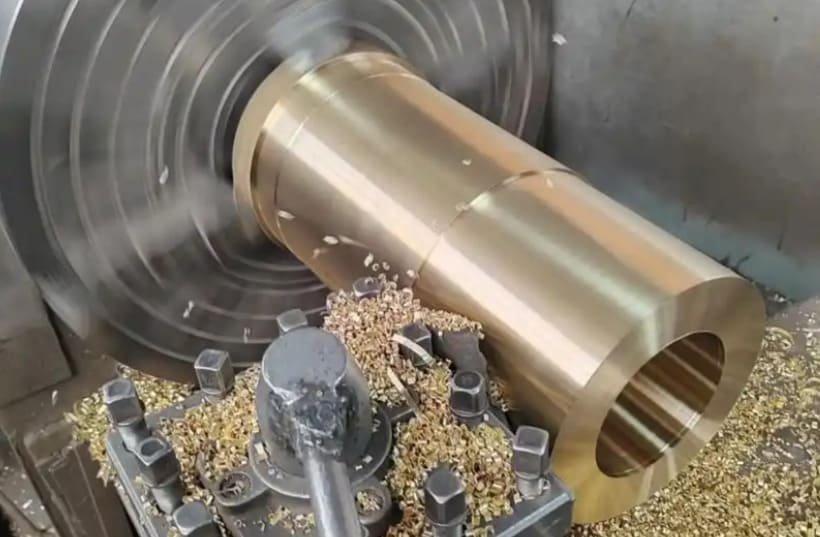
CNC lathe accuracy begins with the machine's mechanical rigidity and its ability to counteract tool pressure during high-velocity material removal.
A study involving 200 different 6061 aluminum test samples showed that machines with integrated liquid-cooling systems reduced dimensional drift by 40% compared to dry-cutting environments.
This thermal stability directly impacts the tool's interaction with the workpiece, preventing the gradual expansion that ruins tight tolerances over long production runs.
When the temperature of the lathe's lead screw increases by just 5 degrees Celsius, the resulting linear expansion can push a part out of its 0.01 mm tolerance zone within seconds.
Precision also hinges on the material's machinability index, which dictates how the tool separates chips from the bulk metal.
Processing specialized alloys like CNC machining bronze requires specific rake angles to prevent "grabbing," a common issue that causes a 0.02 mm deviation in concentricity.
The friction generated during these operations is managed by high-pressure coolant delivered at 1,000 PSI, which flushes chips away and prevents them from scratching the finished surface.
Effective chip evacuation ensures the cutting edge remains sharp, as a dull tool increases cutting force by up to 35%, leading to unwanted deflection.
In a 2024 industrial survey, shops utilizing real-time tool wear monitoring reported a 22% increase in the accuracy of custom aerospace components.
These sensors detect minute vibrations and load changes, signaling the controller to adjust the offset before the part dimensions exceed the specified limits.
| Accuracy Metric | Standard Tolerance | High-Precision Tolerance |
| Linear Dimensions | ±0.05 mm | ±0.005 mm |
| Circularity (Roundness) | 0.015 mm | 0.002 mm |
| Surface Finish (Ra) | 1.6 - 3.2 μm | 0.4 - 0.8 μm |
| Repeatability | 0.010 mm | 0.002 mm |
The table above illustrates the jump from general industrial standards to the high-end precision required for medical and scientific instruments.
Achieving these tighter numbers requires a workholding setup with a "runout" of less than 0.003 mm to ensure the part rotates perfectly on its center axis.
If the chuck or collet has even a tiny amount of wobble, the resulting part will be oval rather than perfectly round, failing the inspection phase.
Data from 500 independent QC inspections suggests that 15% of accuracy failures in custom machining are caused by improper workholding pressure rather than machine error.
Over-clamping can distort thin-walled components by as much as 0.08 mm, a deviation that is often only discovered after the part is released from the machine.
To solve this, technicians use hydraulic pressure controls that adjust the gripping force based on the wall thickness of the metal being turned.
This level of control allows for the production of components that fit together with zero perceptible play, essential for high-pressure hydraulic systems.
Looking at the electronic side, the resolution of the CNC controller determines how smoothly the machine moves through complex arcs.
Older systems from the year 2010 often processed data at lower speeds, resulting in "stair-stepping" on tapered surfaces that measured 0.012 mm deep.
Modern 32-bit controllers calculate tool paths at micro-second intervals, smoothing out these transitions and reducing the need for secondary manual polishing.
The synergy between high-resolution electronics and robust mechanical design allows for a 98% first-pass yield in most professional machine shops.
This efficiency is verified by Coordinate Measuring Machines (CMM) that use ruby-tipped probes to check the part's geometry against the original file.
By verifying the dimensions immediately, shops can maintain a closed-loop system where the machine is constantly tuned for maximum performance.