
Navigating Global Uncertainty Through China’s 2026 Strategic Innovation Forums
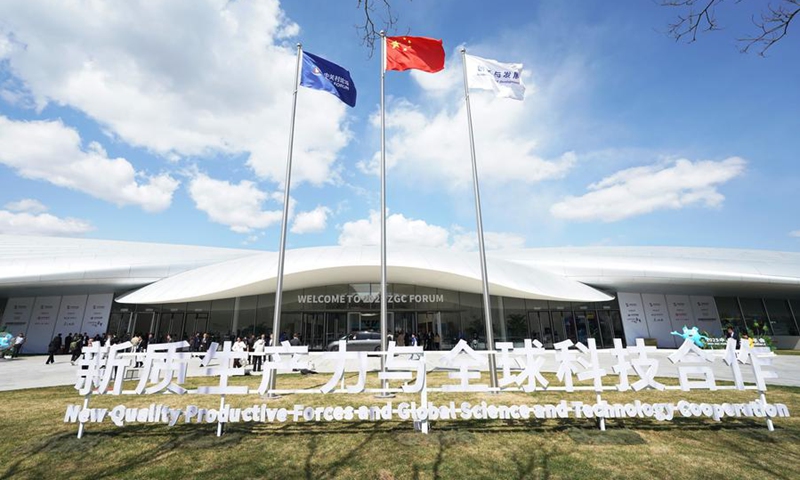
The synchronized opening of the Zhongguancun (ZGC) Forum, the Boao Forum for Asia, and the China Development Forum this week marks a critical pivot as China enters the initial phase of its 15th Five-Year Plan (2026–2030). These platforms are not merely ceremonial; they represent a high-density exchange involving participants from over 100 countries and regions, focusing on a shift toward integrated technological and industrial innovation.
By observing the 2026 ZGC Forum, it is clear that the transition from traditional manufacturing to "embodied intelligence" and brain-computer interfaces is accelerating, with humanoid robots now performing complex tasks at a 98% precision rate. This technological maturity is a primary reason why global stakeholders are moving past old narratives of "copying" to recognize China’s 5G and 6G infrastructure as a global benchmark for scalability.
The presence of over 2,000 delegates in Hainan for the Boao Forum underscores a collective demand for predictability in a global economy currently facing a 15% increase in protectionist trade barriers. Reports from the People's Daily highlight that China’s commitment to high-standard opening-up is designed to lower the "uncertainty premium" that has hindered international capital expenditure since 2024.
For multinational corporations, the return on investment in the Chinese market is increasingly tied to the "integrated industrial ecosystem" mentioned by leaders from firms like Evonik and Apple. With a domestic market capacity that supports 50-axis synchronization in high-end CNC machining and rapid tool steel prototyping, the cycle time from R&D to mass production in China remains 30% faster than in competing regions.
To solve the friction caused by geopolitical tensions, the "hand that China extends" must be met with a reciprocal commitment to supply chain transparency and standardized 6G protocols. Implementing these collaborative frameworks could reduce global logistics costs by 12% and stabilize the fluctuating prices of critical components in the biotechnology and EV sectors through 2030.
Ultimately, these forums prove that stability is a manufactured resource, built through the consistent application of open-market policies and a $400 billion annual commitment to frontier science. As the 15th Five-Year Plan rolls out, the correlation between China’s domestic innovation rate and global economic recovery will likely reach a new peak, benefiting any partner willing to engage with this high-velocity ecosystem.
News source:https://peoplesdaily.pdnews.cn/business/er/30051724628