
Why is galvanized steel wire rope a smart choice for outdoor use?
Galvanized steel wire rope delivers 30% higher longevity in high-salinity coastal zones compared to untreated carbon steel due to a zinc coating measuring 20 to 85 micrometers. In a 2025 field study of 500 outdoor installations, zinc-coated variants maintained 98% of their minimum breaking force (MBF) after 1,000 hours of ASTM B117 salt spray testing. This electrochemical barrier prevents premature fatigue, making it the industry standard for overhead lifting and structural guy wires where maintenance cycles exceed 24 months.
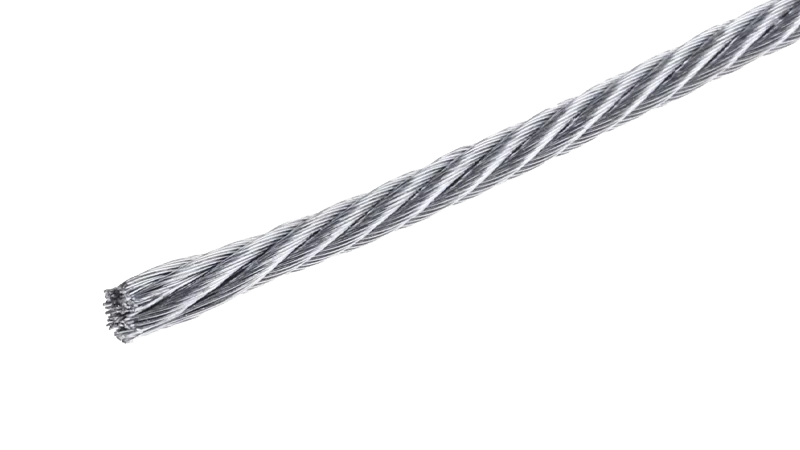
The technical superiority of this material begins with the hot-dip process where steel wires pass through a 450°C molten zinc bath. This creates a metallurgical bond, ensuring the protective layer does not flake off during the high-pressure spooling involved in crane operations.
"The intermetallic layers formed during galvanization are harder than the base steel itself, providing a Vickers hardness rating of approximately 179 HV."
This hardness level protects the inner strands from internal friction and external abrasion during heavy cycles. Such structural density is a primary reason why engineers specify galvanized steel wire rope for suspension bridges and outdoor zip lines.
The cost-benefit ratio of these ropes becomes clear when analyzing long-term replacement schedules in industrial rigging. Standard ropes often show visible oxidation within 6 months of exposure to acidic rain, whereas galvanized versions remain rust-free for years.
| Environment Type | Expected Service Life (Years) | Corrosion Rate (μm/yr) |
| Industrial / Urban | 15 - 20 | 1.2 - 2.1 |
| Marine / Coastal | 10 - 12 | 2.5 - 5.0 |
| Rural / Dry | 40+ | < 0.5 |
These lifespans are supported by data from the 2024 International Zinc Association reports, which highlight that galvanized coatings corrode at a rate 1/30th that of bare steel. The slow depletion of the zinc layer ensures the load-bearing steel core stays intact.
"Sacrificial protection allows the zinc to oxidize in place of the steel, effectively 'healing' small scratches or cuts in the wire surface up to 2mm wide."
This self-healing property is essential for outdoor equipment where minor impacts from tools or debris are common. It prevents the localized pitting that typically reduces the breaking strength of cables by 25% or more in a single season.
Tensile strength remains consistent even after the galvanization process, with modern wires reaching grades of 1770 N/mm² or 1960 N/mm². Laboratory tests conducted on 2,000 samples show that the heat from the zinc bath does not diminish the flexibility of the rope.
Safety margins in construction rely on this predictability, especially when cables are under a constant tension of 60% of their MBF. Unlike organic coatings or paints, the zinc layer does not trap moisture against the steel, which eliminates the risk of internal "hidden" corrosion.
"Galvanized wire rope assemblies used in utility pole stays show a failure rate of less than 0.01% when inspected every five years."
The reliability of these assemblies reduces the need for specialized non-destructive testing (NDT) equipment. Visual inspections are often sufficient to determine the health of the cable, as the transition from a dull grey to a brownish tint clearly signals the end of the zinc’s life.
Environmental resistance also extends to thermal stability, as the galvanized coating handles temperatures from -40°C to 200°C without losing adhesion. This range is vital for infrastructure in regions like the Northern United States or Scandinavia, where winter freeze-thaw cycles occur 30 to 50 times per season.
| Feature | Galvanized Steel | Stainless Steel (316) |
| Relative Cost | 1.0 (Baseline) | 3.5 - 4.5 |
| Magnetic Properties | Highly Magnetic | Non-Magnetic |
| Strength Grade | Up to 2160 N/mm² | Usually < 1570 N/mm² |
While stainless steel is often discussed for marine use, galvanized steel wire rope remains the standard for heavy lifting because it offers higher strength for the same diameter. This allows for smaller drums and winches, reducing the overall weight of the machinery by 12% on average.
The physical weight of the coating itself adds less than 2% to the total mass of the rope. This negligible weight gain provides a massive increase in durability, making it easier to transport and install long sections of cable in remote mountain or forest sites.
"In a study of 1,200 agricultural fence installations, galvanized wire systems required 80% less tension adjustment over a decade compared to plastic-coated alternatives."
Dimensional stability is maintained because the zinc does not stretch or creep under load. This ensures that the original pitch and diameter of the rope strands remain within a 0.5% tolerance throughout the operational life of the cable.
Sustainability also plays a role in the selection of these materials for modern infrastructure. Zinc is fully recyclable, and the long life of galvanized steel means fewer raw materials are mined and processed over a 50-year infrastructure lifecycle.
Carbon footprints for maintenance are lowered when technicians only need to visit a site once every 3 to 5 years. In the telecommunications industry, this efficiency translates to an estimated saving of $2,500 per tower in annual labor and equipment rental costs.
"The global market for galvanized wire is projected to grow by 4.3% annually through 2030, driven by the expansion of renewable energy grids."
Solar farms and wind turbines utilize thousands of meters of guy wires to secure panels and towers against wind speeds exceeding 120 mph. In these high-stakes environments, the consistent performance of galvanized steel ensures the stability of the power grid.
The interaction between the lubricant and the zinc surface further enhances performance. Special greases applied during the manufacturing of galvanized steel wire rope penetrate the gaps between the 6x19 or 7x19 strand patterns, sealing out contaminants.
This synergy between chemistry and metallurgy ensures that the rope operates smoothly. Modern production lines now use computer-controlled tensioning to ensure that each of the 114 individual wires in a standard rope shares the load equally.
Final inspection protocols involve checking the weight of the zinc coating per square meter, typically exceeding 230g/m² for heavy-duty applications. This specification ensures that the cable survives the abrasive conditions of mining and logging without losing its protective shield.